


 1-877-206-4279

The Test of Essential Academic Skills is the pre-admission assessment most U.S. nursing programs use to judge whether an applicant has the academic foundation to survive a clinical curriculum. The current version is TEAS 7. It does not test nursing. It tests whether you can read carefully under time pressure, do arithmetic and algebra without panicking, remember enough biology and chemistry to build on, and write in standard English.
From Nursing Assistant to Nurse Practitioner: What the Ladder Looks Like When Someone Actually Climbs the Whole Thing

If you have spent any time researching nursing programs, you have read the generic success story: an unnamed student, a stock photograph, an arc with no friction in it. It proves nothing, because it describes no one. The reader knows this, which is why it does not work.
The Skill Nobody Puts on a Syllabus: Emotional Intelligence in Healthcare and Tech

Emotional intelligence (EQ) is the ability to recognize what you are feeling, manage it, read what other people are feeling, and use that information to respond well. In healthcare and technology, it is not a soft extra, it is a clinical and professional tool.
Healthcare AI Is Accelerating in the Lab. Who Gets It to the Bedside?

The “last mile” of healthcare AI is the distance between a proven tool and its everyday use in a real care setting. It gets closed by the people who run the systems: nurses, health information professionals, medical coders, informaticists, cybersecurity staff, and administrators. It does not get closed by the people who invent the tools.
Is Practical Nursing Worth It If You Eventually Want to Be an RN? The 45-Week First Step, Explained
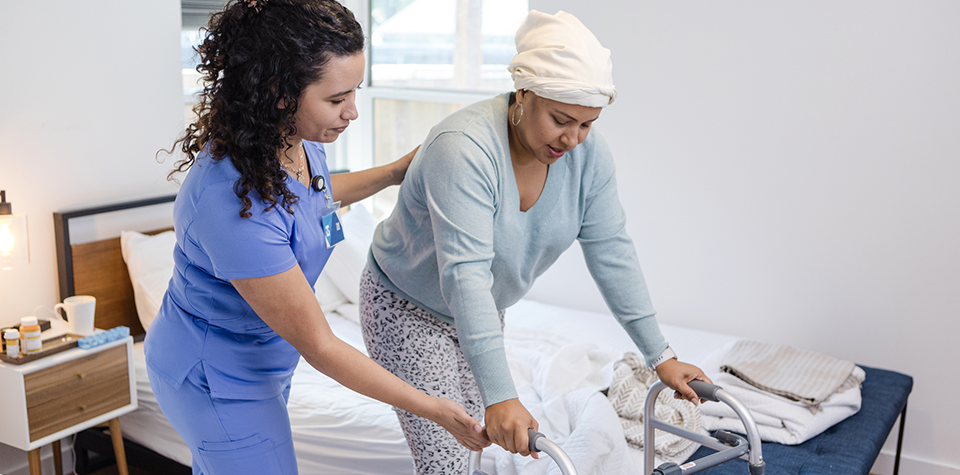
LPNs provide direct, hands-on nursing care under the direction of registered nurses and physicians. Depending on the setting and the state’s scope of practice rules, that typically includes monitoring and recording vital signs, wound care and dressing changes, catheter care, administering certain medications, assisting with personal care and mobility, collecting specimens, documenting patient status, and communicating changes in condition up the care team.
Is an ASN Enough to Become a Registered Nurse? What Students Should Know Before They Enroll

An Associate of Science in Nursing is a two-year college degree built around one job: preparing you to practice safely as an entry-level registered nurse. The coursework is dense and unglamorous in the best way, anatomy and physiology, microbiology, pharmacology, nursing fundamentals, medical-surgical nursing, maternal and newborn care, pediatrics, and mental health nursing paired with supervised clinical hours in real healthcare facilities.
Why Cambridge College Miami is One of the Best Places to Earn Your Nursing Degree in South Florida

South Florida is currently experiencing unprecedented growth, making it one of the most in-demand nursing markets in the country. To put things into perspective, the Florida Hospital Association projects that the state will face a shortage of nearly 60,000 nurses by 2035, with South and Southeast Florida representing the epicenter of this demand.
Cambridge Atlanta Nursing Earns ACEN Accreditation: What It Means for Current Students and Graduates

For the students who enrolled in Cambridge’s Atlanta nursing program over the past two years, there has been a question running quietly underneath every exam, every skills check-off and every clinical shift: when will this program be fully accredited? The program was a candidate. Candidates are on the path. They have not yet arrived.
Becoming a Registered Nurse in Atlanta: Why Cambridge’s ACEN-Accredited ASN Is a Strong First Step

Maybe you are a CNA who has spent enough shifts beside RNs to know you can do their job. Maybe you are an LPN, a paramedic or a respiratory therapist who has hit the ceiling of your current license. Or maybe you are thirty-four, working in retail or logistics, and you have decided that the next decade of your life is going to mean something different.