
 1-877-206-4279
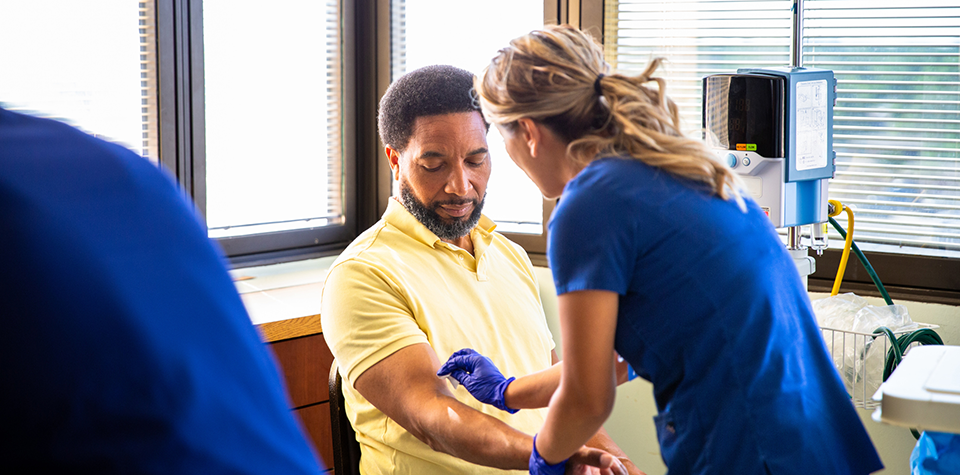
Why an 11-week phlebotomy credential is one of the most practical first steps in healthcare and how Cambridge mentors help you turn it into a Medical Assistant or Medical Laboratory Technician career.
QUICK ANSWER
Phlebotomy is the fastest clinical entry point Cambridge offers: an 11-week diploma program available at all four campuses — Altamonte Springs (Orlando), Atlanta, Delray Beach, and Miami Gardens — that prepares you to draw blood, handle specimens, and sit for national certification. It is also a launchpad. Phlebotomists who want more clinical scope can step up to the 36-week hybrid Medical Assistant program (Altamonte Springs and Atlanta); those who fall in love with the specimen side of the work can pursue the 75-week Associate of Science in Medical Laboratory Technician (Atlanta). At every rung, Cambridge instructors, Program Directors, and Career Services act as mentors who help you decide what comes next — and help you get there.
Already a phlebotomist or finishing the program?
Ask yourself one question: do you want more time with patients, or more time with the science behind the sample? The answer points you toward Medical Assisting or Medical Laboratory Technology. Then confirm current program length, campus availability, format, and admissions requirements before you apply.
Key Takeaways
- Phlebotomy is the quickest clinical entry point at Cambridge: an 11-week diploma available at all four campuses, built around hands-on practice and national certification prep.
- It is a foundation, not a ceiling. The skills you build — patient rapport, precision, specimen integrity — are exactly what Medical Assisting and Medical Laboratory Technology build on.
- Medical Assisting widens your patient-facing scope: vitals, injections, EKGs, and practice operations. Cambridge offers it in a 36-week hybrid format at Altamonte Springs and Atlanta.
- Medical Laboratory Technology moves you from collecting the sample to analyzing it. Cambridge offers a 75-week Associate of Science at the Atlanta campus.
- Mentorship is built in. Instructors, Program Directors, and Career Services stay involved after graduation and are the people to ask when you are ready for the next rung.
- Program length, campus availability, format, accreditation status, and certification eligibility should always be verified before enrollment.
Why Is Phlebotomy Such a Strong First Step Into Healthcare?
Because it puts you in front of real patients, on a real care team, in about eleven weeks.
Most healthcare careers ask you to commit a year or more before you know whether the work suits you. Phlebotomy flips that. In under three months at Cambridge you learn venipuncture and capillary collection on training arms and in lab practice, study specimen handling and infection control, and prepare for the National Healthcareer Association’s Certified Phlebotomy Technician exam. Then you are in a hospital lab, a donor center, a clinic, or an outpatient draw station, doing work that matters on day one.
It also tells you something about yourself. Some phlebotomists discover they love the thirty seconds of calm they can give a nervous patient. Others find themselves curious about what happens to the tube after it leaves their hand. Both instincts point somewhere, and Cambridge has a program for each.
What Does a Phlebotomist Actually Do for a Patient?
A phlebotomist is frequently the first clinical person a patient meets on a hard day, and the quality of that encounter shapes everything that follows.
The technical work is exacting: choosing the site, selecting the right tube and order of draw, labeling correctly, and protecting the specimen so the result the physician relies on is accurate. A mislabeled tube is not a small error; it is a wrong result attached to the wrong person. Precision is the job.
The human work is just as real. A child who is frightened. An older adult with fragile veins who has been stuck three times already. A patient waiting on a diagnosis. Phlebotomists who can steady a person, explain what is happening, and get it right the first time are remembered, and they are the ones nurse managers and lab supervisors ask about when a promotion or a new role opens up.
Where Can You Take a Phlebotomy Credential Next?
Two Cambridge pathways build directly on phlebotomy, and they lead in different directions. One takes you deeper into patient care; the other takes you deeper into the laboratory.
| Compare | Phlebotomy Technician | Medical Assistant | Medical Laboratory Technician |
| Credential | Diploma/Certificate | Diploma/Certificate | Associate of Science |
| Cambridge program length | 11 weeks | Approx. 36 weeks, hybrid (online coursework + on-campus labs, ~6-week externship) | 75 weeks, partial online, with clinical practicum |
| Campus availability | Altamonte Springs, Atlanta, Delray Beach, Miami Gardens | Altamonte Springs and Atlanta (evening classes at Altamonte Springs only) | Atlanta only |
| Where you work | Hospitals, labs, donor centers, clinics, outpatient centers | Physician practices, clinics, specialty and outpatient settings | Hospital and reference laboratories, specialty and research labs |
| Daily focus | Patient interaction, venipuncture, specimen labeling and handling | Rooming patients, vitals, injections, EKGs, phlebotomy, scheduling and records | Running and interpreting tests in hematology, chemistry, microbiology, blood bank |
| Certification you prepare for | NHA Certified Phlebotomy Technician (CPT) | RMA (AMT), CMA (AAMA), CCMA (NHA); optional phlebotomy and EKG | Confirm current MLT certification eligibility with the Program Director (see accreditation note) |
| Best fit when… | You want to enter healthcare quickly and confirm the field is for you | You want more patient-facing scope and a mixed clinical/administrative day | You want to move from collecting the sample to analyzing it |
How Does Medical Assisting Build on Phlebotomy?
Medical Assisting keeps everything you like about phlebotomy and adds the rest of the patient visit.
Medical assistants room patients, take vital signs, prepare exam rooms, perform EKGs, administer injections where permitted, assist with minor procedures, educate patients, and manage scheduling, records, and insurance processes. Phlebotomy is one course in the Medical Assistant curriculum, which means you arrive with a head start and a confidence most classmates will not have yet.
The Cambridge Medical Assistant diploma runs approximately 36 weeks in a hybrid format: coursework online, hands-on skills on campus one to two days a week for day students or three evenings a week for evening students, and a clinical externship of about six weeks at the end. Graduates are eligible to sit for the RMA, CMA, and CCMA certification exams. The program is offered at the Altamonte Springs and Atlanta campuses; evening classes are available at Altamonte Springs only.
Choose this path if you want a broader patient-facing role, a clinic-hour schedule, and a credential that many students later use as a bridge toward nursing.
How Does Medical Laboratory Technology Build on Phlebotomy?
If phlebotomy made you curious about the science, Medical Laboratory Technology is where that curiosity becomes a career.
Medical laboratory technicians run the tests that phlebotomists make possible: complete blood counts in hematology, metabolic panels in clinical chemistry, cultures in microbiology, compatibility testing in the blood bank, urinalysis, and serology. Most clinical decisions rest on laboratory results, and MLTs are the people who generate them. It is detail-driven, instrument-rich, and largely behind the scenes.
The Cambridge Associate of Science in Medical Laboratory Technician is a 75-week program offered at the Atlanta campus in a partial-online format, with general-education courses, a laboratory science core, and a clinical practicum in a working lab. Your phlebotomy background shows up immediately: Phlebotomy/Specimen Collection is part of the curriculum, and understanding pre-analytical variables makes you a better technician from the first week.
Accreditation note: Cambridge states that the program has reached Serious Applicant Status with the National Accrediting Agency for Clinical Laboratory Sciences (NAACLS). This is a pre-accreditation stage and is not accreditation. Because some laboratory certification pathways depend on graduating from an accredited program, confirm current status and certification eligibility with the Atlanta Program Director and on Cambridge’s Licensure & Accreditation page before enrolling.
Which Pathways Are Available at Each Campus?
Phlebotomy is offered at every Cambridge campus. The two step-up programs in this article are campus-specific, so the table below shows where each is offered today and which other next steps to ask about at your campus.
| Campus | Phlebotomy | Medical Assistant | Med Lab Technician | Other campus step-ups to ask about |
| Altamonte Springs (Orlando) | Yes | Yes (day and evening) | — | Patient Care Technician, Nursing Assistant, Practical Nursing, ASN |
| Atlanta (Sandy Springs) | Yes | Yes (day) | Yes | Nursing Assistant, ASN, Radiologic Technology |
| Delray Beach | Yes | — | — | Patient Care Technician, Nursing Assistant, Practical Nursing, ASN |
| Miami Gardens | Yes | — | — | Patient Care Technician, Nursing Assistant, Practical Nursing, ASN |
Florida students who want the laboratory track should speak with an advisor about the Atlanta program; students at Delray Beach and Miami Gardens who want a patient-facing next step should ask about Patient Care Technician and Practical Nursing at their own campus. Availability changes, so confirm current offerings before making a plan around them.
How Do Cambridge Mentors Help You Take the Next Step?
The people who taught you to find a vein are the same people who will tell you, honestly, where you belong next.
Cambridge’s phlebotomy classes are small and hands-on, which means instructors know how you work: whether you slow down under pressure or settle into it, whether you gravitate to the patient or to the bench. That knowledge does not expire at graduation. Instructors and Program Directors routinely write references, coach students through certification, and point them toward the program that fits.
Career Services works alongside them. Their job begins with resume preparation, interview coaching, and job placement support for your first phlebotomy role, and continues when you come back a year later asking what comes next. They keep relationships with regional hospitals, laboratories, and practices, and they know which employers offer tuition assistance for a returning student.
The practical advice is simple: stay in touch. Send your instructor a note when you pass your certification exam. Tell Career Services where you landed. When you are ready to step up, you will be talking to people who already know your name and your work.
How Should You Choose Between Medical Assisting and Medical Laboratory Technology?
Use four questions to compare the two paths:
- Who do you want to spend your day with? Patients and providers point toward Medical Assisting. Instruments, samples, and a lab team point toward MLT.
- What schedule fits your life? Clinics tend to run business hours. Hospital laboratories run around the clock, which can mean night and weekend shifts — or shift differentials. Actual schedules vary by employer.
- How much time can you commit? The Medical Assistant diploma is roughly 36 weeks; the MLT associate degree is 75 weeks and includes general-education coursework. Both are investments; they are different sizes.
- Where do you want to be in ten years? Many medical assistants move toward nursing or practice management. Many MLTs move toward laboratory supervision or, with a bachelor’s degree, medical laboratory scientist roles. Choose the ladder, not just the rung.
The goal is not the shortest program. It is the credential that moves you toward the work you actually want to be doing.
What Should a Phlebotomist Do Before Enrolling in the Next Program?
| DO THIS | WHAT YOU SHOULD HAVE AFTERWARD |
| Finish strong and get certified | Complete the Phlebotomy Technician program and sit for the NHA CPT exam. Certification is what most employers ask for first. |
| Work, and pay attention | Take an entry-level phlebotomy role and notice what you enjoy: the patient conversation, or what happens to the tube after it leaves your hand. |
| Name the destination | Patient-facing and clinic-based? Medical Assisting. Lab-based and science-driven? Medical Laboratory Technician. Nursing? Ask about PCT, PN, and ASN. |
| Talk with your mentors | Your former instructor, the Program Director, and Career Services know your work. Ask them which path fits and what they see in you. |
| Confirm current program details | Verify length, campus, format, admissions requirements, externship or practicum expectations, and accreditation status on official Cambridge pages. |
| Ask HR about tuition assistance | Many hospital and lab employers offer tuition benefits. Confirm the annual amount, eligible programs, grade requirements, and any service commitment. |
Frequently Asked Questions
How long is Cambridge’s Phlebotomy Technician program?
Cambridge lists the Phlebotomy Technician diploma at 11 weeks, offered at the Altamonte Springs, Atlanta, Delray Beach, and Miami Gardens campuses. Start dates and schedules vary by campus, so confirm current details before applying.
Do I need to be certified to work as a phlebotomist in Florida or Georgia?
Neither Florida nor Georgia requires a state phlebotomy license, but most employers expect national certification. Cambridge’s program prepares graduates for the NHA Certified Phlebotomy Technician (CPT) exam. Confirm any employer-specific requirements with the hiring organization.
Is Medical Assistant a step up from Phlebotomy?
It is a broader role rather than a higher rank. Medical assistants typically perform phlebotomy plus vitals, injections, EKGs, patient education, and front-office work. If you want more patient-facing scope, it is a natural next step. Cambridge offers the 36-week hybrid program at Altamonte Springs and Atlanta.
Does my phlebotomy training count toward the Medical Assistant program?
Phlebotomy is part of the Medical Assistant curriculum, and prior experience will help you in that course. Whether any formal credit or advanced standing applies depends on current Cambridge policy; ask an advisor at the campus you plan to attend.
What does a Medical Laboratory Technician do that a phlebotomist does not?
Phlebotomists collect and prepare specimens. MLTs analyze them, performing tests in hematology, clinical chemistry, microbiology, urinalysis, and immunohematology, and reporting results the clinical team uses to diagnose and treat. It is a science-heavy, largely behind-the-scenes role.
Where is the Medical Laboratory Technician program offered?
Cambridge offers the 75-week Associate of Science in Medical Laboratory Technician at the Atlanta campus only, in a partial-online format with a clinical practicum. Students at the Florida campuses should speak with an advisor about options.
Is the MLT program accredited?
Cambridge states that it has reached Serious Applicant Status with the National Accrediting Agency for Clinical Laboratory Sciences (NAACLS). This is a pre-accreditation stage, not accreditation. Because some laboratory certification routes depend on graduating from an accredited program, confirm the current status and certification eligibility with the Program Director before enrolling.
Can I keep working as a phlebotomist while I study?
Many students do. The Medical Assistant program’s hybrid format places on-campus time at one to two days a week (day) or three evenings (Altamonte Springs). MLT students should plan for the clinical practicum schedule. Compare the actual requirements against the shifts you work.
What should I verify before applying?
Verify current program length, campus availability, format, admissions requirements, externship or practicum expectations, accreditation status where applicable, certification eligibility, tuition, and financial-aid eligibility using official Cambridge and regulatory sources rather than an older article or third-party summary.
START WITH ONE DRAW. DECIDE WHERE IT TAKES YOU.
Bring your goals, your work schedule, and your questions. A Cambridge advisor at any of our four campuses can help you compare Phlebotomy, Medical Assisting, Medical Laboratory Technology, and the pathways beyond them.