
 1-877-206-4279
Quick Answer: How Online Education Works at Cambridge
Online classes are delivered through a single learning platform you can reach from a laptop, tablet or phone, 24 hours a day.Most coursework is asynchronous, you complete readings, lectures, labs and discussions on your own schedule, within weekly deadlines set by your instructor.Some courses add live, scheduled elements such as virtual office hours, review sessions or group work.Technology, health information and healthcare administration programs are delivered fully online, including virtual labs.Licensure-track nursing programs combine online coursework with supervised clinical or practicum hours completed at approved healthcare sites.Your diploma names the program, not the delivery format. Online graduates earn the same credential as on-campus graduates.Online students have access to advising, tutoring, library resources, technical support and Career Services.
If you are researching online college for the first time, the honest question underneath all the marketing language is simple: what will I actually be doing every week, and will it fit around my job and my family? This guide answers that question for online programs at Cambridge College of Healthcare & Technology — how classes are structured, how healthcare programs handle labs and clinical hours, what technology you need, and how students are supported from orientation through graduation.
What Does “Online” Actually Mean at Cambridge?
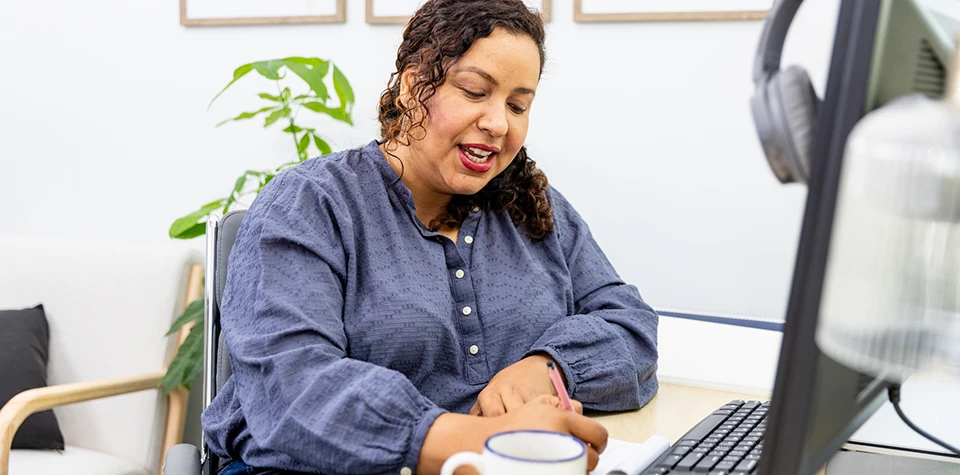
Online means your coursework lives on a secure learning platform you log into from wherever you are. Course materials, assignments, discussion boards, grades, instructor feedback and student services are all in one place, available around the clock.
What online does not mean is learning alone. Cambridge courses are built as guided, cohort-style experiences: you have an instructor who teaches the course, classmates you interact with each week, and advisors who track your progress. Cambridge offers online and hybrid diplomas, certificates and degrees across healthcare and technology, so the format can flex to the program and to your life.
Are Cambridge Online Classes Synchronous or Asynchronous?
Most online coursework at Cambridge is asynchronous, with some courses adding synchronous components. Here is the difference in practical terms:
Asynchronous learning — you choose the hours
Recorded lectures, readings, interactive modules, virtual labs, quizzes and discussion posts can be completed at 6:00 a.m. before a shift or at 10:00 p.m. after the kids are in bed. Deadlines are still real, assignments are due on the schedule in your syllabus, but the hours you keep are yours.
Synchronous learning — you show up at a set time
Live elements such as virtual office hours, review sessions, skills demonstrations or group project meetings happen at scheduled times. These are where you get real-time answers and get to know your instructor and classmates as people.
Ask your admissions advisor how a specific program balances the two. A cybersecurity course and a nurse practitioner course do not have the same rhythm, and you deserve to know the rhythm before you enroll.
Which Cambridge Programs Can You Study Online?
Cambridge builds its online offerings around three career-anchored areas, nursing, healthcare data and revenue cycle, and cybersecurity and IT, plus healthcare administration. You can browse the full list of online programs, but here is the shape of it:
| Area of Study | Example Online Credentials | How the Learning Happens |
| Nursing | RN to BSN, MSN – Family Nurse Practitioner | Coursework online; licensure-track programs include supervised clinical or practicum hours arranged with approved sites |
| Health Data & Revenue Cycle | Medical Billing & Coding, Health Information Technology, Health Information Management, MS in Health Informatics | Fully online, including practice with coding systems, health records workflows and data tools |
| Cybersecurity & IT | Healthcare Cyber Specialist, Healthcare Cybersecurity & Privacy, Cyber & Network Security | Fully online with virtual labs and hands-on technical exercises |
| Healthcare Administration | BS in Healthcare Administration | Fully online, project-based coursework drawn from real operational scenarios |
For the technology side specifically, Cambridge technology programs are delivered 100% online with virtual labs, and many include preparation for industry certifications. On the healthcare data side, the Medical Billing & Coding program prepares students to sit for a national coding certification exam. Bachelor- and master-level options are outlined on the advanced degrees page.
How Do Online Healthcare Programs Handle Labs and Clinical Hours?
This is the question that separates healthcare online education from every other kind, and it deserves a direct answer: you cannot become a nurse entirely through a screen, and no reputable program will tell you otherwise.
What Cambridge does is split the work sensibly. The knowledge portion, pathophysiology, pharmacology, health policy, informatics, coding systems, security frameworks, is well suited to online delivery and is where the flexibility lives. The hands-on portion happens in person, in real healthcare settings, under supervision.
That is where Cambridge’s footprint matters. With campuses across Florida and Georgia and long-standing relationships with hospitals, clinics, long-term care communities and physician practices in those markets, Cambridge places students in clinical and practicum settings through established partnerships rather than leaving students to find their own sites. For students in nursing programs, that difference is not a marketing detail, it is the difference between finishing on time and stalling out.
Programs that lead to licensure also carry state-specific requirements. Confirm with an advisor how a program works in the state where you live and intend to practice before you enroll.
What Does a Typical Week Look Like for an Online Student?
Every course differs, but a representative week in an online Cambridge course tends to include:
- Reviewing the week’s objectives, assigned readings and recorded or live instruction
- Completing an applied activity, a virtual lab, a coding exercise, a case study, a care-plan analysis or a simulation
- Posting to a discussion board and responding substantively to classmates
- Submitting a graded assignment, quiz or project milestone by the syllabus deadline
- Checking instructor feedback and grades, and reaching out with questions when something is unclear
Students who succeed almost always do the same thing: they block specific hours on a calendar and treat those blocks the way they would treat a shift. Flexibility is a gift, but it only pays off when it is scheduled.
What Technology Do You Need for Online Classes?
Less than most people expect. A reliable internet connection and a device you are comfortable typing on are the essentials, a laptop or desktop for writing-heavy and lab-heavy coursework, with a tablet or phone useful for checking announcements, watching lectures and keeping up on the go.
Some courses require a webcam and microphone for presentations, proctored assessments or live sessions. Specialized software, when needed, is provided or accessed through the learning platform. New students receive orientation and technical support tutorials before the first week, and technical help is available when something breaks at an inconvenient hour, which, in online education, is usually when it breaks.
How Are Online Students Supported?
Distance is a logistical fact, not a support model. Cambridge online students have access to:
- New student orientation — a walkthrough of the platform, expectations and resources before classes begin
- Academic advising — help with course sequencing, transfer credit and building a schedule that matches your workload
- Faculty access — instructors who teach the material, answer questions and know your name
- Library and research resources — digital access to the journals, databases and references your coursework requires
- Technical support — assistance with the learning platform and course technologies
- Career Services — résumé development, interview preparation and employer connections, starting well before graduation
Do Employers Respect an Online Degree?
Yes, and the framing of the question has shifted. Employers hire for the credential, the accreditation behind it and the skills you can demonstrate. Your diploma and transcript identify the program you completed, not the delivery format you used to complete it.
There is also a quiet advantage. Completing a program online while working demonstrates self-direction, time management, digital fluency and the ability to collaborate with people you rarely see in person. In healthcare organizations running hybrid teams, telehealth services, remote coding operations and distributed security functions, those are not soft skills. They are the job.
How Is Artificial Intelligence Part of Online Learning at Cambridge?
AI is reshaping clinical documentation, revenue cycle operations, imaging workflows, population health analytics and threat detection. Cambridge treats that as a curricular responsibility rather than a headline: students learn what these tools do, where they fail, how to evaluate their output, and what professional and ethical judgment still belongs to the human being in the room.
For online students, that instruction lands naturally, because you are already learning in a digital environment where the tools of modern practice can be demonstrated, used and critiqued directly.
How Do Online Credentials Build on Each Other?
Cambridge programs are designed as ladders rather than dead ends, so a credential you can finish now becomes credit toward the one you want next:
- Nursing: Nursing Assistant to Practical Nursing to Associate of Science in Nursing to RN to BSN to MSN – Family Nurse Practitioner
- Health data and revenue cycle: Medical Billing & Coding to Health Information Technology to Health Information Management to Master of Science in Health Informatics
- Cybersecurity and IT: Healthcare Cyber Specialist certificate to associate and bachelor’s degrees in healthcare cybersecurity, privacy and network security
The practical effect is that you can start at the level your current life allows, go to work, and come back for the next rung when you are ready, often with an employer helping to pay for it.
How Do You Enroll in an Online Program?
- Identify the program and credential level that matches your goal.
- Speak with an admissions advisor about start dates, prerequisites, program length and state requirements where you live.
- Submit your application and any required transcripts or documentation.
- Review transfer credit, previously earned credits may shorten your path.
- Complete financial aid conversations and confirm what your investment looks like.
- Attend orientation and log into your first course.
Frequently Asked Questions About Online Learning at Cambridge
Are there set login times for online classes?
For asynchronous coursework, no, you log in when it works for you. Assignments, discussion posts and assessments still have deadlines, and any live sessions a course includes are held at scheduled times.
Can I work full time while enrolled online?
Many Cambridge online students do. Course load is the variable that matters most; an advisor can help you build a schedule that matches the hours you realistically have each week.
Is online tuition different from on-campus tuition?
Tuition and fees vary by program and credential level. Ask an admissions advisor for the current cost of the specific program you are considering, along with scholarship, grant, federal aid, employer tuition assistance and military benefit options.
How long does an online program take to complete?
It depends on the credential level, the program and how many courses you take at a time. Certificates and diplomas are the shortest path; associate, bachelor’s and master’s degrees build from there. Transfer credit can shorten the timeline.
Do online students have to come to campus?
Technology, health information and healthcare administration programs are delivered fully online. Programs with clinical, lab or practicum requirements include in-person components completed at approved sites, which may be near you rather than at a campus.
Will my diploma say “online”?
No. You earn the same credential as students in any other format.
Can I transfer credits I already have?
Often, yes. Have your prior transcripts reviewed early, credit you have already earned may reduce both the time and the cost of finishing.
What if I fall behind?
Tell someone early. Advisors and instructors can help with pacing, tutoring and course planning, and the earlier a problem surfaces, the more options exist to solve it.
Is Cambridge accredited and authorized to teach students in my state?
Cambridge is institutionally accredited, individual programs carry programmatic accreditations where applicable, and the college participates in the National Council for State Authorization Reciprocity Agreements (NC-SARA). Because licensure requirements are state-specific, confirm your state with an admissions advisor before enrolling.
Your Schedule Is Not the Obstacle You Think It Is
The healthcare and technology workforce is short on exactly the people who are currently telling themselves they cannot afford the time. Cambridge built its online programs for those people — the ones already working shifts, already raising families, already doing the hard part. Pick the credential that changes your next two years. Then let someone walk you through what it takes.