


 1-877-206-4279
At a Glance: Key Questions Answered
Has Cambridge College of Healthcare & Technology’s Miami campus earned ACEN accreditation?
Yes. The Associate of Science in Nursing (ASN) program at Cambridge College of Healthcare & Technology’s Miami campus has achieved ACEN accreditation, a nationally recognized standard of excellence in nursing education recognized by the U.S. Department of Education and the Council for Higher Education Accreditation (CHEA).
What is ACEN accreditation and why does it matter?
ACEN (Accreditation Commission for Education in Nursing) is the leading specialized accrediting body for nursing programs in the United States. ACEN accreditation confirms that a nursing program meets rigorous standards for curriculum quality, faculty qualifications, student outcomes, and clinical preparation. Most state boards of nursing require NCLEX-RN eligibility from graduates of ACEN-accredited programs, and many employers and graduate schools give preference to candidates who completed accredited programs.
Who leads the Cambridge Miami ASN program?
The Academic Dean of the Associate of Science in Nursing program at Cambridge College of Healthcare & Technology is Abby Villarroya, PhD, MSN, RN, CMSRN, a highly credentialed nurse educator whose leadership was instrumental in achieving this accreditation milestone.
Where is the Cambridge Miami Gardens campus located?
Cambridge College of Healthcare & Technology’s Miami campus is located at 1000 Park Centre Boulevard, Suite 112, Miami Gardens, FL 33169. The campus can be reached at (305) 627-3001.
Every nursing student I have ever interviewed has asked some version of the same question: Is this program going to get me where I need to go? It is the right question to ask. The accreditation status of a nursing program determines whether a graduate can sit for the NCLEX-RN, whether employers will seriously consider their application, and whether they can ever walk into a BSN or MSN program without having to start over.
So when Cambridge College of Healthcare & Technology’s Miami Gardens campus earned programmatic accreditation from the Accreditation Commission for Education in Nursing (ACEN) for its Associate of Science in Nursing program, that was not a press release moment. It was the answer to that question, confirmed by a national body that answers to no one on our campus.
“I have witnessed our faculty engage in the process while improving our concept-based nursing curriculum, our students push through clinical rotations exhausted but determined, and our staff build something from scratch that this community genuinely needed. ACEN looked at all of it and said yes.”
Abby Villarroya, PhD, MSN, RN, CMSRN | Academic Dean, ASN Program, Cambridge College of Healthcare & Technology
What Is ACEN Accreditation and Why Should It Matter to You?
The Accreditation Commission for Education in Nursing has upheld quality standards in nursing education for over 80 years, with roots tracing back to 1893. Today, ACEN is recognized by the U.S. Department of Education and the Council for Higher Education Accreditation (CHEA) as the authoritative accrediting body for all levels of nursing education programs, from practical nursing to doctoral programs.
When a nursing program earns ACEN accreditation, it means a rigorous multi-stage process has been completed: a comprehensive institutional self-study, an on-site peer evaluation visit, review by an Evaluation Review Panel, and a final decision by the ACEN Board of Commissioners. Each of these steps examines our mission and capacity, faculty qualifications, curriculum design, student resources, clinical placement quality, and most critically, student outcomes including NCLEX-RN pass rates.
Put plainly: ACEN does not hand out accreditation. Programs earn it, and only those that demonstrate sustained, documented excellence receive it.
Why ACEN Accreditation Changes Everything for Cambridge Miami Students
- NCLEX-RN Eligibility: Most state boards of nursing require graduation from an ACEN-accredited program for licensure exam eligibility. This is the gateway to your nursing license.
- Employer Preference: Leading hospitals and healthcare systems in South Florida and nationally prioritize hiring RNs who graduated from accredited programs.
- Transfer & Advanced Degree Eligibility: Graduates who wish to pursue a BSN, MSN, or beyond will find that most programs require prior completion of an ACEN-accredited ASN or BSN.
- Federal Financial Aid Eligibility: ACEN accreditation supports students’ access to federal Title IV financial aid, including Pell Grants and Stafford Loans.
- Credit Transferability: Credits earned at ACEN-accredited institutions are more widely accepted for transfer to other accredited institutions.
- Peace of Mind: Students, families, and employers know the curriculum meets nationally verified quality benchmarks, not just state minimums.
The Road to Accreditation: A Commitment Years in the Making
ACEN accreditation is not a quick process. It requires an institution to demonstrate, through documented evidence, that every aspect of its program from faculty credentials to patient simulation labs, from clinical partnerships to student support services meets the ACEN Standards and Criteria. For the Miami Gardens campus, this journey reflected the dedication of faculty, staff, administration, and students working together toward a unified mission.
Central to that effort has been Academic Dean Abby Villarroya, PhD, MSN, RN, CMSRN. Dr. Villarroya brings to this program not only advanced academic credentials, including a doctoral degree and a master’s in nursing, but also her certification as a Certified Medical-Surgical Registered Nurse (CMSRN), a specialty credential that reflects deep clinical expertise.
Her leadership philosophy is grounded in the belief that every student who walks through the doors of Cambridge College of Healthcare & Technology deserves not only rigorous preparation but genuine mentorship and support on their path to becoming a registered nurse. Her vision is to prepare nurses who are clinically competent, technologically fluent, culturally responsive, and morally grounded.
Under her academic leadership, the Miami program has developed a curriculum that integrates evidence-based practice, high-fidelity simulation, and robust clinical partnerships with leading Miami-area hospitals, clinics, and long-term care facilities. These partnerships ensure that Cambridge students gain real-world clinical experience, not just classroom theory, before they ever sit for their boards.
How We Teach: A Concept-Based Curriculum Built for Real Clinical Thinking
The ASN program at Cambridge Miami runs approximately 90 weeks. But I want to be direct about something: time is not the variable that produces a competent nurse. What happens inside that time is.
Why Traditional Nursing Curricula Fall Short
For most of nursing education’s history, programs were built around a content-first model: teach the cardiac system, then the respiratory system, then the renal system, then neuro. Students learned in silos. It is known that this model creates graduates who can recall isolated information but struggle to transfer that knowledge when they encounter something they have not specifically studied. In a field where patients rarely present with textbook-clean diagnoses, that gap is a patient safety problem.
Concept-based nursing education organizes learning around core clinical concepts rather than disease systems, enabling students to apply knowledge across any patient, diagnosis, or care setting. Our concept-based curriculum model addresses this directly. Instead of organizing learning around disease systems, it organizes learning around fundamental clinical concepts: perfusion, oxygenation, fluid and electrolyte balance, infection, pain, mobility, coping, and communication. It teaches students to apply those concepts across diagnoses, patient populations, and care settings.
A student who deeply understands the concept of impaired perfusion can reason through a patient with a myocardial infarction, a neonate with a ventricular septal defect, and a post-surgical patient with a pulmonary embolism. They do not need to have been drilled on each scenario individually. They can think their way through it, because they understand the underlying mechanism and have mastered the concept of perfusion.
How Concept-Based Learning Connects to the Next Generation NCLEX
This is not a theoretical distinction. Research published in peer-reviewed nursing education literature has shown that concept-based curricula produce measurably better first-time NCLEX-RN pass rates compared to traditional content-based programs, with concept-based graduates passing at 85% compared to 73% for content-based programs.
The National Council of State Boards of Nursing recognized this shift in clinical reasoning demands when it redesigned the NCLEX itself into the Next Generation format, which now requires students to demonstrate clinical judgment and decision-making across layered patient scenarios, not simple fact recall. A program that teaches students to memorize content will not adequately prepare them for what the current NCLEX is actually asking.
At Cambridge Miami, concept-based learning is integrated from the first weeks of the program and built progressively in complexity. Students encounter clinical exemplars, which are real patient scenarios anchored to the core concepts, before they enter the clinical environment, so that when they do walk onto a hospital floor or into a long-term care facility, they are not encountering clinical reasoning for the first time. They are applying a framework they have already practiced.
What Students Experience in Simulation and Clinical Practice
The simulation labs at the Miami Gardens campus are designed to reinforce this. High-fidelity simulation scenarios are built around concepts, not isolated procedures. A student is not just practicing a skill. They are practicing the recognition of a deteriorating patient, the prioritization of competing needs, and the communication with a care team under time pressure. These are the cognitive tasks the NCLEX tests for and the tasks their first employer will need them to perform independently on day one.
Clinical placements across Miami-Dade County extend this into the real world. Our partners include hospitals, skilled nursing facilities, long-term care, and specialty clinics. This is a deliberate range of care settings because concept-based learning demands that students see how the same concepts manifest differently depending on where they practice. Impaired mobility looks different in a post-surgical acute care patient than it does in a resident with Parkinson’s in a skilled nursing facility.
Students who have only ever trained in one type of setting are not fully equipped. The patient population in South Florida is multilingual, multigenerational, and highly complex medically, which reinforces this every single clinical day. That is not an obstacle to learning. It is exactly the environment that makes the learning stick.
What ACEN Accreditation Means for the Greater Miami Community
Beyond the individual student, ACEN accreditation carries implications for the entire South Florida healthcare ecosystem. When nursing programs are accredited, they produce graduates who are better prepared, more consistently competent, and more readily deployable into demanding clinical roles. For the hospitals and healthcare networks of Miami-Dade County, that matters enormously.
The nursing shortage in Florida and nationally is not a temporary phenomenon. There is a strong demand for registered nurses through the next decade. Every accredited nursing graduate who enters the workforce represents a meaningful investment in public health infrastructure. Cambridge’s Miami campus is now formally positioned to contribute ACEN-validated nursing professionals to that pipeline.
“ACEN accreditation signals to the public and to the educational community that a nursing program has clear, appropriate educational objectives and is working to achieve them.”
Accreditation Commission for Education in Nursing (ACEN), acenursing.org
Frequently Asked Questions About the Cambridge Miami ACEN-Accredited ASN Program
Common Questions from Prospective Students
Is Cambridge College of Healthcare & Technology accredited overall?
Yes. Cambridge College of Healthcare & Technology holds institutional accreditation from the Accrediting Bureau of Health Education Schools (ABHES) across all its campuses. The Miami Gardens ASN program now additionally holds ACEN programmatic accreditation, which is the specialized accreditation specific to nursing education.
Can Cambridge Miami nursing graduates apply for the NCLEX-RN?
Yes. Graduates of the ACEN-accredited ASN program at Cambridge’s Miami campus are eligible to apply for the NCLEX-RN licensing examination. Passing the NCLEX-RN is the final step to becoming a licensed registered nurse in Florida and across the United States.
How long does the ASN program at Cambridge Miami take?
The Associate of Science in Nursing program at Cambridge College of Healthcare & Technology’s Miami campus can be completed in approximately 90 weeks, combining classroom instruction, lab training, and supervised clinical experiences.
Does Cambridge offer financial aid for the Miami nursing program?
Yes. Cambridge College participates in the U.S. Department of Education’s Title IV Federal Financial Aid programs, including Pell Grants and Stafford Loans, for students who qualify. ACEN accreditation supports continued eligibility for these federal funding mechanisms.
What clinical opportunities are available to Cambridge Miami nursing students?
Cambridge partners with leading healthcare facilities throughout the Miami area, including hospitals, clinics, nursing homes, and assisted living facilities, to provide students with diverse, real-world clinical experiences that prepare them for immediate employment upon graduation.
How do I apply to the Cambridge Miami ASN program?
Prospective students can apply by contacting the Miami Gardens campus directly at (305) 627-3001 or by visiting our contact page. Our admissions team will walk you through eligibility requirements, program start dates, and financial aid options.
What makes Cambridge’s concept-based curriculum different from other Miami nursing programs?
Unlike traditional programs that teach nursing through isolated disease systems, Cambridge’s concept-based curriculum organizes learning around core clinical concepts such as perfusion, oxygenation, and mobility that apply across any patient, diagnosis, or care setting. This approach is aligned with the Next Generation NCLEX and prepares graduates to think critically from day one, not just recall facts.
What are the admission requirements for the Cambridge Miami ASN program?
Prospective students interested in the Associate of Science in Nursing program at Cambridge College of Healthcare & Technology’s Miami Gardens campus are encouraged to contact our admissions team directly at (305) 627-3001 or visit our contact page for the most current eligibility requirements, prerequisite coursework, and program start dates.
A Message of Excellence for Every Student Who Dared to Dream
For every student who considered nursing but wondered whether they could find a quality program close to home in Miami, this milestone is for you. ACEN accreditation at Cambridge College of Healthcare & Technology’s Miami campus means you no longer have to compromise on the quality of your nursing education to stay in your community.
The path to becoming a registered nurse is demanding. It requires resilience, intellectual rigor, clinical competence, and deep compassion. It is a path that deserves to be supported by an institution whose program has been measured, evaluated, and validated by national peers. The Cambridge Miami campus now carries that validation.
Under the leadership of Academic Dean Abby Villarroya, PhD, MSN, RN, CMSRN, and supported by a dedicated faculty and staff committed to student success, the Associate of Science in Nursing program at Cambridge Miami is prepared to develop the next generation of South Florida’s registered nurses: nurses who are ACEN-prepared, NCLEX-ready, and career-ready from day one. Apply today to start your journey.
Ready to Begin Your Nursing Career?
Learn more about the ACEN-accredited Associate of Science in Nursing program at Cambridge College of Healthcare & Technology’s Miami Gardens campus. Seats fill quickly. Take the first step today.
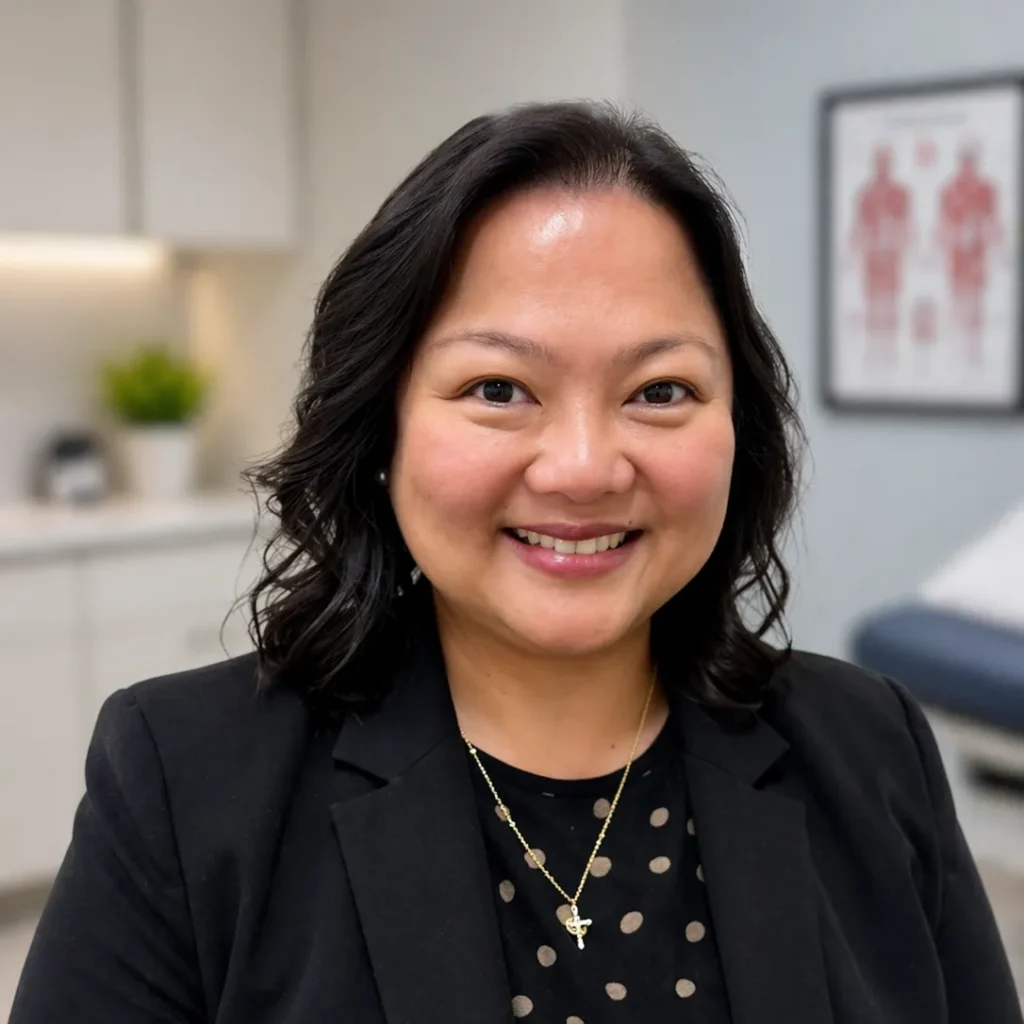
Abby Villarroya, PhD, MSN, RN, CMSRN
Academic Dean, Associate of Science in Nursing Program, Cambridge College of Healthcare & Technology, Miami Campus
Dr. Villarroya is a doctorally prepared nurse educator and Certified Medical-Surgical Registered Nurse (CMSRN) who leads the ASN program at Cambridge College of Healthcare & Technology’s Miami Gardens campus. With a clinical background in medical-surgical nursing and years of experience in nursing education, she brings both bedside perspective and academic rigor to every aspect of program development. Her academic and clinical expertise has been central to the program’s ACEN accreditation achievement and its commitment to graduating nurse-ready professionals for the South Florida community.