
 1-877-206-4279
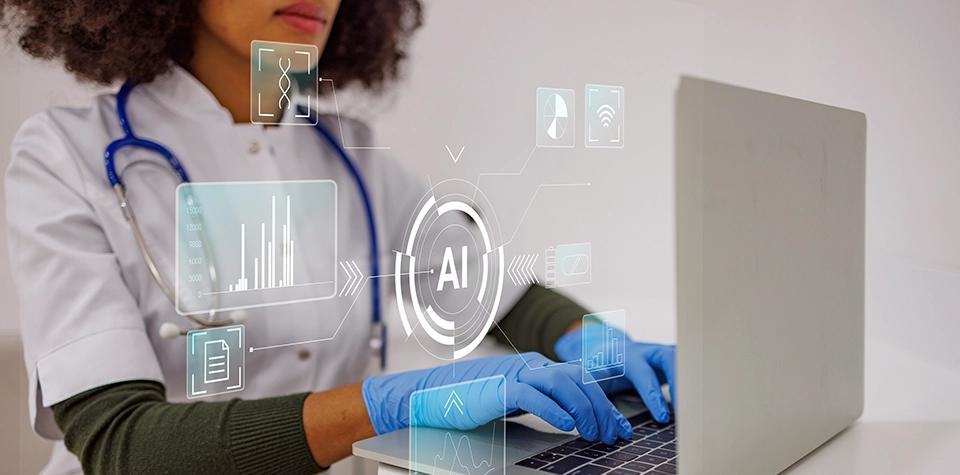
Healthcare is entering one of the most exciting transformations in modern history. Artificial intelligence is no longer a distant idea or a futuristic concept. It is already shaping the way hospitals operate, how medical offices manage patient information, how nursing homes and assisted living facilities protect residents, how imaging professionals detect disease, how nurses coordinate care, and how healthcare administrators make better decisions.
At Cambridge College of Healthcare & Technology, we understand what this moment means.
The future of healthcare will belong to professionals who are compassionate, clinically prepared, technologically confident, ethically grounded, and ready to work alongside intelligent tools. That is why AI is becoming the center of our learning process: not to replace the human heart of healthcare, but to strengthen it.
Cambridge’s Artificial Intelligence Resource Center is designed to support students in an AI-driven workforce, and the AI Lab helps inform curriculum, learner experiences, and career services so students are better prepared for the changing job market. Cambridge also states that it regularly reviews courses, introduces workshops, and launches innovative programs to keep content aligned with technological relevance.
The Future of Healthcare Is Human and AI-Powered
AI is already being used across healthcare to support diagnostics, medical imaging, patient monitoring, documentation, cybersecurity, scheduling, billing, coding, predictive analytics, and clinical decision-making. The FDA maintains a public list of AI-enabled medical devices authorized for marketing in the United States, helping healthcare providers and patients identify when medical devices use AI technologies.
But the most important part of AI in healthcare is not the machine.
It is the trained professional who knows how to use technology responsibly.
A nurse must know when technology supports patient care — and when human judgment, compassion, and clinical experience must lead. A radiologic technologist or sonographer must understand how advanced imaging tools can enhance accuracy while still relying on skill, positioning, patient communication, and safety. A health information professional must know how data moves through the healthcare system, how it is protected, and how it supports better outcomes. A healthcare administrator must understand how AI can improve workflow, staffing, compliance, and patient access. A cybersecurity professional must understand how to defend hospitals, nursing homes, assisted living centers, medical offices, and clinical systems from threats that could affect patient safety.
That is the Cambridge advantage: we prepare students for healthcare as it is becoming, not only as it used to be.
Why AI Is at the Center of Cambridge’s Learning Process
AI belongs at the center of healthcare education because healthcare itself is becoming more digital, more data-driven, and more connected. Today’s students must learn how to think critically in a world where information moves quickly and technology influences nearly every part of care.
At Cambridge, AI is not treated as a shortcut. It is treated as a learning partner, a conversation starter, a research tool, a simulation enhancer, a career-readiness resource, and a bridge between classroom knowledge and real-world healthcare challenges.
AI helps students ask better questions. It helps them understand complex scenarios. It encourages them to explore healthcare trends, patient safety issues, medical terminology, coding logic, imaging innovation, cyber risk, clinical documentation, and leadership decisions. Most importantly, it pushes students to develop the skill that every future healthcare professional needs: judgment.
The World Health Organization has emphasized that AI holds promise for diagnosis, treatment, research, drug development, and public health, while also stressing that ethics and human rights must remain central to design, deployment, and use. That balance is exactly why healthcare education must teach both innovation and responsibility.
At Cambridge, students are encouraged to understand AI through a healthcare lens: How does it affect the patient? How does it affect privacy? How does it affect workflow? How does it affect safety? How does it help the care team? How does it strengthen the future professional?
Preparing Students Across the Healthcare Ecosystem
Cambridge College of Healthcare & Technology offers healthcare and technology programs across certificate, diploma, associate, bachelor’s, and master’s levels. Cambridge’s program offerings include Medical Billing and Coding, Healthcare Cyber Specialist, Practical Nursing, Diagnostic Medical Sonography, Health Information Technology, Healthcare Cybersecurity & Privacy, Medical Laboratory Technician, Cybersecurity, Radiation Therapy, Radiologic Technology, Health Information Management, Healthcare Administration, Practical Nursing, Associates Degree in Nursing, Bachelor of Science in Nursing—Tracks, RN to BSN, Master of Health Informatics, and Master of Science in Nursing — Family Nurse Practitioner and more.
Each of these fields is being touched by AI in a different way.
Medical Billing and Coding students are entering a world where automation, claims intelligence, coding accuracy tools, documentation review, and revenue-cycle analytics are becoming more important. But AI does not eliminate the need for trained professionals. It raises the standard. Students must understand compliance, payer rules, medical terminology, documentation, and ethical coding.
Health Information Technology and Health Information Management students are preparing for a healthcare system built on data. AI depends on accurate, secure, well-managed information. Without skilled HIT and HIM professionals, healthcare data cannot safely support analytics, interoperability, quality improvement, or patient-centered care.
Health Informatics students are positioned at the intersection of healthcare, technology, data, leadership, and change. Cambridge’s Master of Health Informatics program is described as preparing students with advanced knowledge and skills that intersect healthcare and information technology. In an AI-powered healthcare system, informatics professionals help translate data into better decisions.
Healthcare Cybersecurity and Healthcare Cyber Specialist students are preparing for one of the most urgent needs in healthcare. Hospitals, nursing homes, assisted living facilities, medical offices, and clinical systems are all digital targets. Cambridge’s Institute of Innovation includes a Healthcare Cybersecurity Lab focused on safeguarding healthcare institutions such as hospitals, nursing homes, and assisted living centers from cybersecurity breaches.
Healthcare Administration students are preparing to lead organizations where AI may influence operations, staffing, compliance, budgeting, quality metrics, patient experience, and strategic planning. Healthcare leaders must understand not only what technology can do, but how to implement it responsibly.
Radiologic Technology, Radiation Therapy, Diagnostic Medical Sonography, and Medical Laboratory Technology students are entering clinical fields where technology is advancing quickly. AI can support image analysis, workflow efficiency, quality assurance, treatment planning, and lab processes — but skilled professionals remain essential to patient preparation, safety, accuracy, communication, and compassion.
Nursing students — NA, PN, ASN, BSN, RN to BSN, and MSN Family Nurse Practitioner — are preparing for the heart of healthcare. AI may support documentation, triage, education, remote monitoring, care planning, and population health, but nurses remain the human connection patients trust. Cambridge’s nursing pathways prepare students for roles across patient care, leadership, public health, and advanced family practice.
Hospitals, Nursing Homes, Assisted Living, Medical Offices: AI Is Everywhere Care Happens
Healthcare does not happen in only one setting. It happens in emergency rooms, imaging suites, long-term care facilities, outpatient clinics, medical offices, laboratories, assisted living communities, home health environments, and administrative departments.
That is why Cambridge’s approach is so important.
Cambridge students gain exposure to hands-on labs, simulations, clinical rotations, externships, and real-world healthcare environments. Cambridge describes coordinated clinical rotations across a network of hospitals, nursing homes, and healthcare facilities, where students translate classroom skills into real-world impact. The Orlando/Altamonte Springs campus is described as connected to clinical sites across Florida, including hospitals, clinics, outpatient centers, nursing homes, assisted living facilities, long-term care facilities, testing centers, and healthcare laboratories.
In Miami, Cambridge notes clinical and externship partnerships with medical facilities including hospitals, clinics, nursing homes, assisted living facilities, and long-term care facilities. In Atlanta, Cambridge describes clinical and externship programs with hospitals, clinics, nursing homes, assisted living facilities, and other long-term facilities.
This matters because AI in healthcare must be understood in context. A hospital may use AI differently than a nursing home. A medical office may use AI differently than a radiology department. A cybersecurity team may evaluate risks differently than a nurse, administrator, billing specialist, or sonographer.
Cambridge students learn that healthcare is a team effort — and AI is becoming part of that team.
Four Campus Locations & Global Campus Online, One Mission
Cambridge serves students through four campus locations: Atlanta, Georgia; Delray Beach, Florida; Miami Gardens, Florida; and Orlando/Altamonte Springs, Florida. These campuses, along with online and hybrid learning options, help students pursue healthcare and technology education while staying connected to the communities where care is delivered.
From Florida to Georgia, Cambridge’s mission is clear: help students build knowledge, confidence, professionalism, and career readiness so they can become the future health professionals their communities need.
Cambridge Understands Every Student’s Journey
Every student arrives with a story.
Some are beginning their first healthcare career. Some are changing careers. Some are parents. Some are working adults. Some are already in healthcare and want to advance. Some dream of becoming nurses. Others see themselves in sonography, radiology, radiation therapy, medical labs, billing and coding, cybersecurity, informatics, or healthcare leadership.
Cambridge understands that education is not one-size-fits-all.
That is why the Cambridge model emphasizes mentorship, academic support, hands-on practice, clinical preparation, career services, and a student-centered environment. Cambridge describes support that includes one-on-one academic support and tutoring, career coaching, resume help, interview preparation, job placement assistance, and employer networking opportunities.
AI strengthens this process by helping students explore ideas, practice problem-solving, review complex concepts, and connect classroom learning to real healthcare settings. But the foundation remains human: faculty, staff, mentors, clinical coordinators, advisors, and career professionals who help students move from uncertainty to confidence.
Responsible AI: Preparing Professionals Who Can Lead With Ethics
AI is powerful, but healthcare requires trust.
Patients must trust that their data is protected. Families must trust that decisions are safe. Nurses and providers must trust that tools are transparent. Administrators must trust that systems are compliant. Communities must trust that innovation does not create bias or widen disparities.
The Office of the National Coordinator for Health Information Technology has established transparency requirements for AI and predictive algorithms that are part of certified health IT, supporting fairness, appropriateness, validity, effectiveness, and safety. The National Academy of Medicine’s AI Code of Conduct framework emphasizes responsible, equitable, and human-centered AI in health and medicine.
That is why Cambridge’s focus on AI is not simply about using new tools. It is about preparing students to ask the right questions:
• Is this technology safe?
• Is it fair?
• Is patient information protected?
• Is the human professional still accountable?
• Does it improve care?
• Does it help the patient?
These are the questions tomorrow’s healthcare leaders must be ready to answer.
Q&A: AI, Cambridge, and the Future of Healthcare Education
Q: Will AI replace healthcare workers?
No. AI will change healthcare work, but it will not replace the need for skilled, compassionate professionals. Patients still need nurses, technologists, therapists, lab professionals, medical office teams, coders, cybersecurity specialists, administrators, and providers who can think critically, communicate clearly, and make sound decisions.
Q: Why is AI important for nursing students?
AI may support documentation, care coordination, patient education, remote monitoring, staffing insights, and clinical decision support. Nursing students must understand how to use technology while protecting patient dignity, safety, and trust.
Q: How does AI affect radiology, radiation therapy, and sonography?
AI is increasingly connected to imaging, workflow, quality control, and clinical decision support. But imaging professionals still need strong anatomy knowledge, positioning skills, patient communication, radiation safety awareness, and clinical judgment.
Q: Why do Medical Billing and Coding students need to understand AI?
Billing and coding are becoming more technology-driven. AI may help identify documentation gaps, coding patterns, or claim issues, but trained professionals must understand compliance, accuracy, privacy, and reimbursement rules.
Q: What role do HIT, HIM, and Health Informatics play in an AI-powered healthcare system?
AI depends on data. HIT, HIM, and Health Informatics professionals help ensure healthcare information is accurate, secure, organized, accessible, and useful for decision-making. These professionals are essential to the future of digital healthcare.
Q: Why is healthcare cybersecurity so important?
Healthcare organizations hold sensitive patient information and depend on digital systems for care delivery. Cybersecurity professionals help protect hospitals, nursing homes, assisted living facilities, medical offices, and clinical systems from threats that can disrupt care and compromise privacy.
Q: How does Cambridge support students individually?
Cambridge supports students through faculty mentorship, advising, academic support, hands-on labs, simulations, clinical preparation, career coaching, resume support, interview preparation, and employer networking opportunities.
Q: Why choose Cambridge for the future of healthcare?
Because Cambridge connects healthcare education, technology, clinical preparation, AI awareness, cybersecurity, informatics, and student support. The goal is not only to help students graduate — it is to help them become confident, capable, future-ready healthcare professionals.
The Future Health Professional Starts Here
AI is changing healthcare, but people will always be at the center of care.
The future needs nurses who understand technology and compassion. Imaging professionals who understand both advanced tools and patient comfort. Medical billing and coding professionals who understand accuracy and compliance. HIT, HIM, and Health informatics professionals who understand data and ethics. Cybersecurity professionals who understand that protecting systems means protecting patients. Healthcare administrators who understand innovation, leadership, and responsibility.
Cambridge College of Healthcare & Technology is helping build that future.
Across Florida, Georgia, and online, Cambridge is preparing students to step into hospitals, nursing homes, assisted living facilities, medical offices, clinics, laboratories, imaging centers, and healthcare organizations with confidence.
Because the future of healthcare is not only artificial intelligence.
It is human intelligence, clinical intelligence, emotional intelligence, ethical intelligence, and the courage to help others — strengthened by technology and guided by purpose.